© Masao Yamamoto, #0832
Consulting,
in a studio manner.
A studio is where the work is made, not delegated. Appia is small by design and selective by necessity, so advisory thinking, curatorial authorship, and operational execution stay within one practice rather than dispersing across several. The result is continuity with clients, artists, and institutions, over time.
The etymology
behind our name
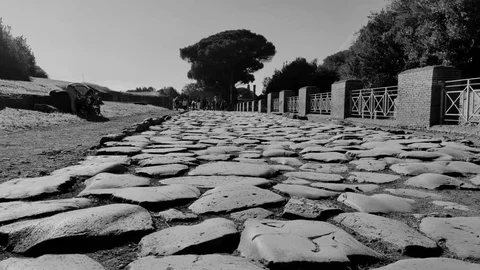
The Via Appia, or Appian Way, was one of the earliest and most important roads of the Roman Republic, begun in 312 BCE. Stretching roughly 540 kilometres from Rome to present-day Brindisi, it connected the capital to the Adriatic Sea and, by extension, to the eastern Mediterranean. More than a route of travel, it enabled the circulation of goods, ideas, military forces, and correspondence, shaping cultural and political exchange across regions. Appia takes this ancient pathway as its name and as a small reminder of what infrastructure does: laid stone by stone, it connects, mediates, and sustains.
The idea behind
our logomark
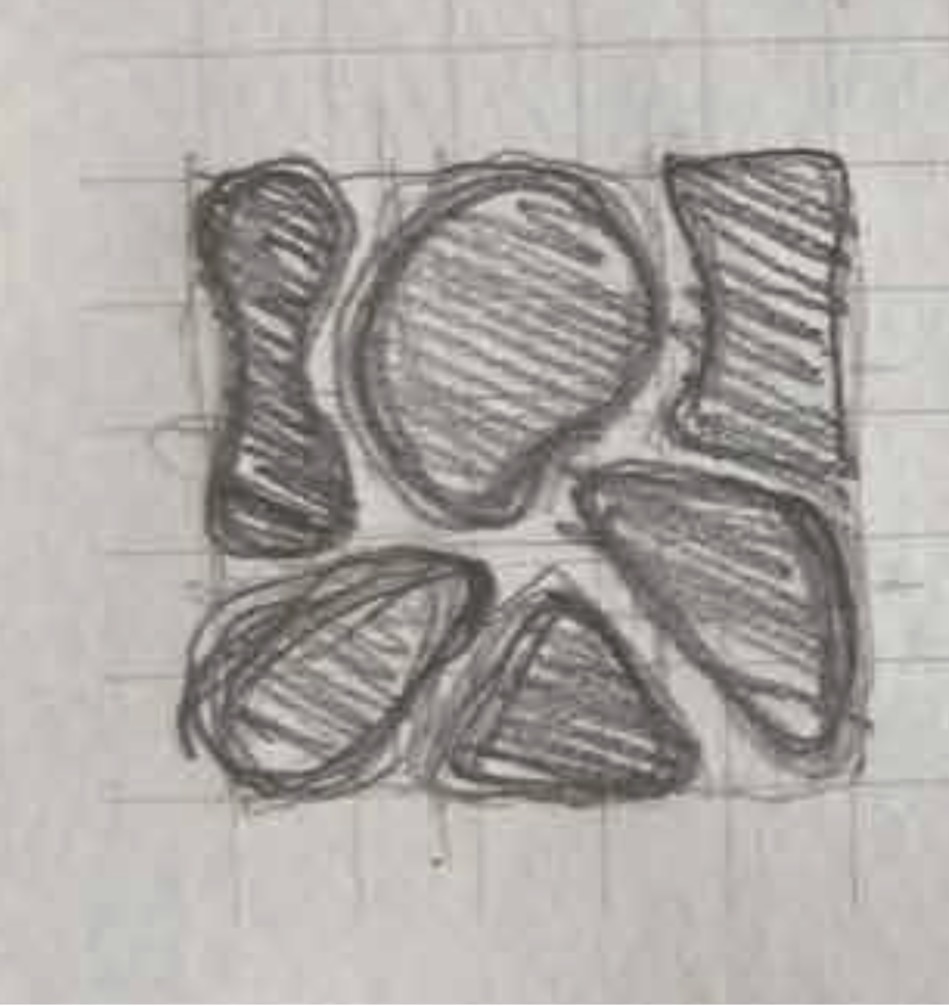
The identity, designed by Esen Karol, takes its cue from the name. The Via Appia — the Roman road begun in 312 BCE — survives in long stretches as irregular basalt stones held in disciplined relation, load-bearing, made to last. Karol's logomark abstracts that paving: distinct forms, separately weighted, composed rather than uniform. The wordmark is set in Ten Oldstyle, a contemporary face drawn from Renaissance humanist revivals of Roman inscriptional letterforms — the same lineage, read through type. The mark is meant to register as infrastructure rather than monument: something that connects, and persists.

Károly Aliotti
Art consultant and curator, active across modern and contemporary art and the historical fields behind them.
From 2007 to 2015, he served as Curator and Collection Manager for the Lucien Arkas Collection, overseeing acquisitions of nineteenth- and twentieth-century European art and design and contributing to the establishment of the Arkas Museum in Izmir. From 2017 to 2023, he held the same position at the Ömer Koç Collection, coordinating acquisitions across antiquities, ceramics, British modernism, and contemporary practice. Between 2019 and 2023, he was simultaneously Deputy Director of Meşher, Istanbul, where he developed exhibitions, publications, and public programmes in collaboration with international institutions.

Appia works with collectors, institutions, corporations, and artists for whom culture is a considered position, and who expect the same of their advisors.
info@appia.studio